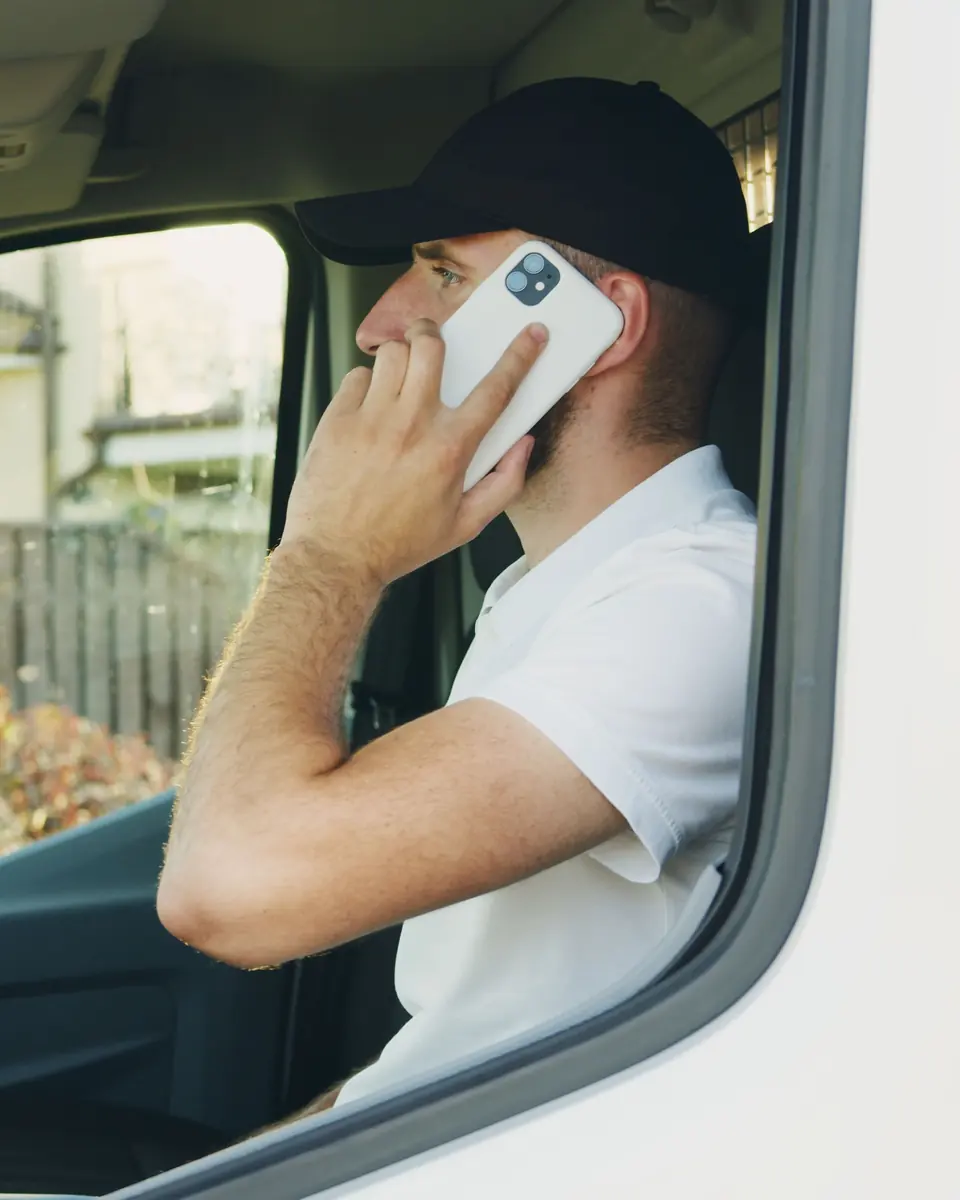
If you run a plumbing, HVAC, roofing or electrical business and you can’t answer every call, the fix is short: text anyone you miss within seconds, make one person responsible for calling back, and stop counting on voicemail. A homeowner with water coming through the ceiling doesn’t leave a message. They call the next company on the list.
Why a missed call usually becomes a lost job
Think about who actually calls a home service business. Someone whose water heater is leaking into the garage isn’t browsing. They search, tap the first number, and if it rings out they tap the second. You were probably on a roof or under a sink with both hands full, which is a good reason to miss a call and a bad reason to lose the job.
So how many of those callers leave a voicemail? A few vendors that sell call tools have measured it. Invoca says fewer than 3% of callers who get sent to voicemail leave a message. A 2026 survey of 1,000 U.S. adults who had recently called a plumber, HVAC company or electrician, reported by Vendasta, found that only 9% usually or always leave a voicemail, and that most of the rest (71%) call the next business.
Both sources sell this kind of software, so don’t treat the exact percentages as gospel. The direction is what matters: a voicemail box catches very few of the people who needed you.
You can get your own number in a week. Write down every call you miss (your phone’s call log has them all), then note how many you returned and how long it took. Most owners are surprised, and not in a good way.
Five fixes, from free to worth paying for
1. Make your voicemail do some work
Most greetings say “leave a message and we’ll get back to you.” Try this instead: say who you are, say you’re probably on a job, and tell people the fastest way to get help is to text this number. It’s fifteen seconds of audio and five minutes to record. It won’t rescue many calls, but it costs nothing.
2. Set up a missed-call text-back
For most owners this is the biggest single change. When a call goes unanswered, the caller gets a text within seconds. Here’s an example of what a good one says:
Hi, this is Dave from Rivera Plumbing. Sorry we missed you, we’re on a job right now. What’s going on, and what’s the address? We’ll get back to you shortly.
It does three things. It tells the person a real business has their request, it gets you the details to decide how urgent it is, and it gives them a reason not to dial the next company while they wait. Many business phone systems and small-business texting tools can do this, so check what yours already offers before paying for anything new.
A few ground rules. Keep it a reply to the person who just called, not a marketing blast. Include a simple way to opt out, like “reply STOP”. Don’t promise a time you can’t hit. We’re not lawyers, so if you’re unsure about the texting rules, ask whoever sets it up to walk you through them.
3. Let people book without talking to you
Some customers don’t want to wait for a callback at all. Put a link to your booking page or a short quote request form in that first text. If someone would rather pick a time at 9 p.m. than play phone tag, let them.
4. Decide who calls back, and when
Automation buys you time. It doesn’t replace the callback. Pick one person and one rule, for example: every missed call gets a call back within 15 minutes, between jobs. Or batch it at set times, say 10, 12 and 3. Write the rule down. If you’re a one-person shop, that person is you, so make it a habit and not a hope.
5. Add an answering service when the volume justifies it
If you’re missing more calls than you can chase, a live answering service or an AI receptionist can pick up for you. Both have trade-offs. Live services cost more per call and know less about your business than you do. AI receptionists are cheaper and never sleep, but some callers don’t like talking to a bot, and it needs careful setup so it doesn’t give wrong answers about prices or availability. We’d start with the text-back and add this only if your own numbers say you need it.
Mistakes we’d steer you away from
- Sending a generic “Thanks for contacting us!” Nobody with a leak wants that. Ask a real question.
- Setting it up and never reading the replies. A text-back only works if a person looks at what comes in.
- Promising “we’ll be right there” at 2 a.m. when you won’t be.
- Chasing forever. One follow-up the next morning is plenty. Then stop.
Common questions
Does a missed-call text-back really work?
It gives you a shot at a customer you would otherwise lose for good. It won’t win every caller, and nobody can honestly promise you a conversion rate, but replying in seconds beats a voicemail box that almost nobody uses.
Is it okay to text someone who just called me?
Replying to someone who just contacted you is very different from sending marketing messages, but texting rules in the US are real. Keep it to a reply, include an opt-out, and check with your phone provider or a lawyer about your situation. This isn’t legal advice.
Do I need an AI receptionist?
Not to start. Fix the basics first: a text-back, a clear callback rule and a booking link. If you’re still missing more calls than you can handle after that, then look at an answering service, live or AI.
How much does this cost?
Some business phone systems include text-back at no extra charge. If you’d rather have it set up and managed for you, that’s what our follow-up systems plan covers. We price it on a call, after we’ve looked at how your leads come in today.
If you’d rather not build this yourself, book a free strategy call. We’ll look at how calls reach you today and tell you what we’d set up first. No pitch deck.